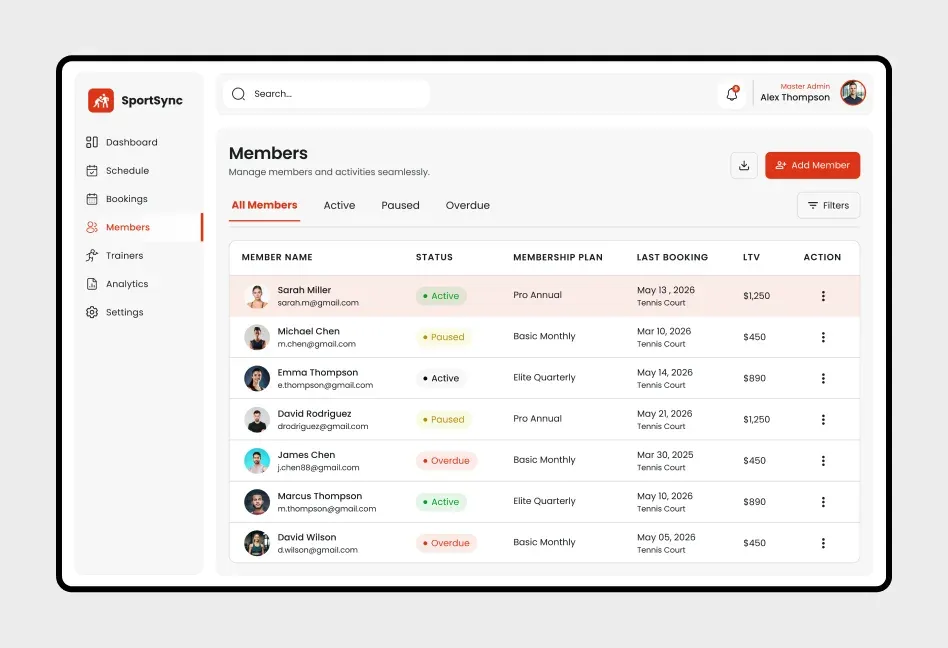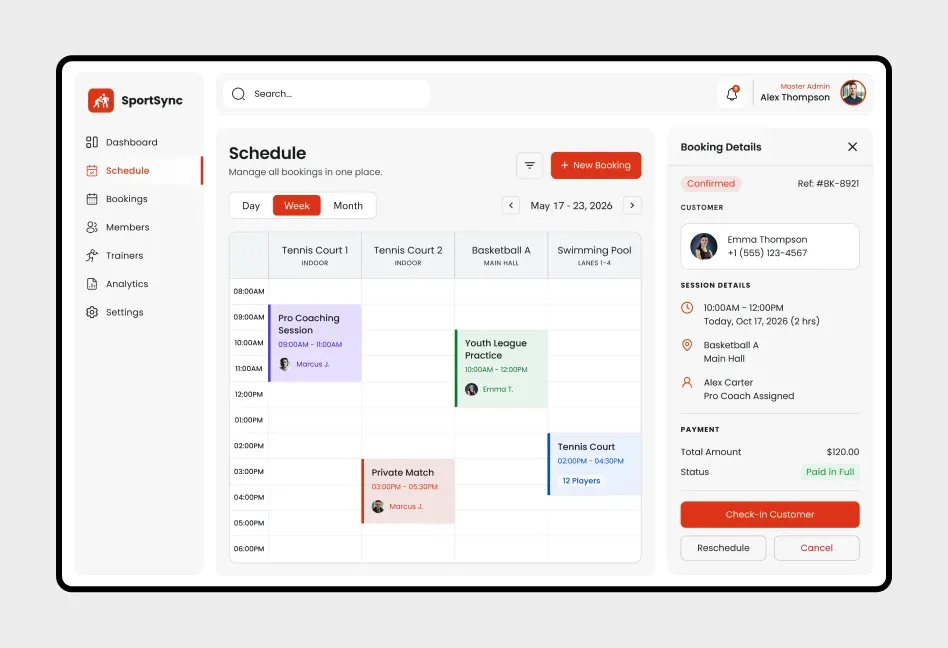

SPEC INDIA modernised the SaaS platform of a Netherlands-based sports management company serving clubs and multi-location facilities. We moved payments from Stripe to Telr, rebuilt the backend on Node.js REST APIs and reworked billing, refunds, admin roles and localisation. The outcome: lower processing costs, a steadier platform and clearer admin control.
Our client is a Netherlands-based company that runs an all-in-one SaaS platform for sports clubs and multi-location facilities. Bookings, memberships, trainers, billing, customer engagement and analytics all live in one place. As operational demands grew, gaps started to show. Payment costs were eating into margins, multi-country billing was getting harder to manage, and the backend wasn’t keeping up. That’s when they partnered with SPEC INDIA to
Every booking and membership payments went through a setup with high transaction fees. As the platform grew, those fees took a bigger bite out of profit. The model wasn’t going to hold up at scale.
The back-end was showing its age. Bottlenecks came up often, stability slipped, and there was little room left to scale. Clubs and members felt it in day-to-day performance, and every new demand on the platform made the gaps wider.
Invoicing and refunds across countries had turned messy. With no streamlined process, the team dealt with inefficiencies and the occasional billing error. Every cross-border invoice or refund took more effort than it should have, and mistakes were hard to avoid.
Administrators didn’t have enough control. Managing permissions and responsibilities was awkward, so people leaned on workarounds to get routine tasks done. That slowed operations down and made it hard to give each person exactly the access their role needed.
As the platform expanded across regions, it got harder to deliver an experience that felt right for each market. Users in different countries expect a platform that feels local, and a one-size-fits-all experience was starting to fall short.
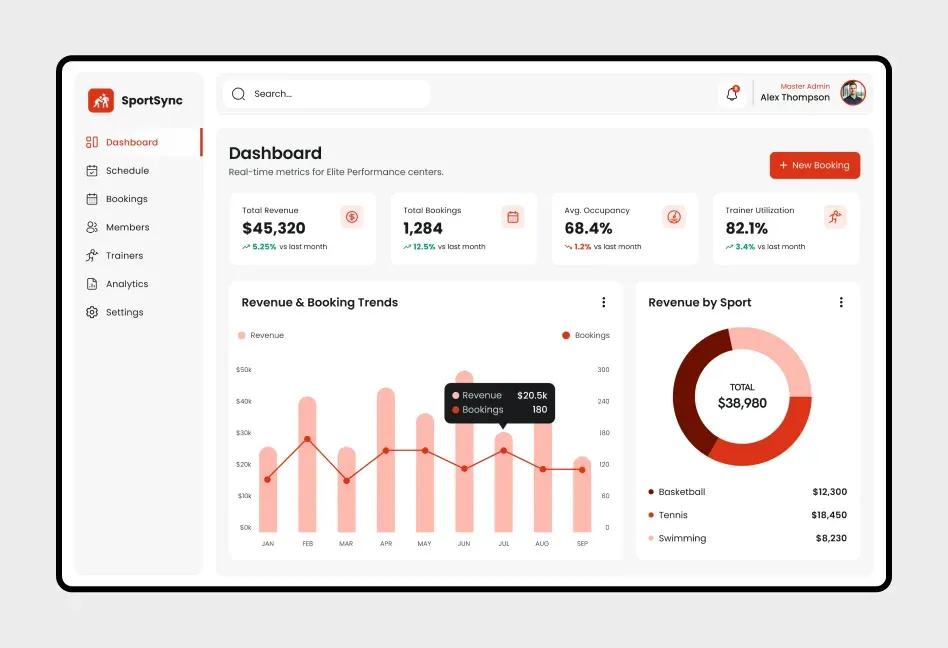
We moved payments from Stripe to Telr. Processing costs dropped considerably, which protected the client’s margins and gave the platform a more cost-effective base to build on as it keeps growing.
We rebuilt the backend on scalable Node.js REST APIs and retired the legacy architecture behind the stability problems. The platform is now noticeably more reliable and performs better, with real room to grow. Users notice the difference day to day.
We redesigned invoicing and refunds from the ground up. Multi-country financial operations are now far more accurate and much easier to manage, which means fewer billing errors and a lot less manual effort for the people handling them.
We added role-based access control, so administrators can manage permissions and responsibilities across the platform without workarounds. Each person gets the access their role calls for, and admins get clearer visibility and tighter control over how the platform runs day to day.
We improved how the platform adapts to different regions, so it feels native and relevant to users in each market. As the platform reaches new regions, people get an experience that feels local instead of generic.
Localisation made the platform feel native, so it travelled further across markets.
Steadier, clearer platform meant clubs needed to ask for help less often.
Moving from Stripe to Telr brought transaction fees down.
Rebuild backend to remove the bottlenecks and instability, so the platform runs more reliably, and users notice it day to day.
Redesigned invoicing and refund workflows make multi-country finances more accurate and quicker to process
Role-based access gives administrators clear control over permissions and responsibilities
Reliable platform lifted customer satisfaction and increased retention ratio.