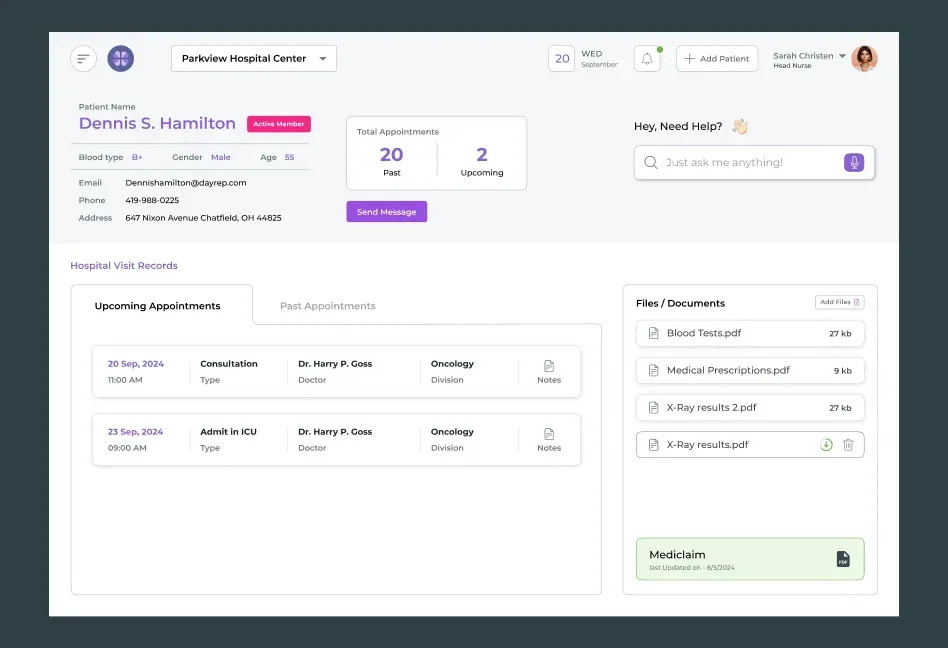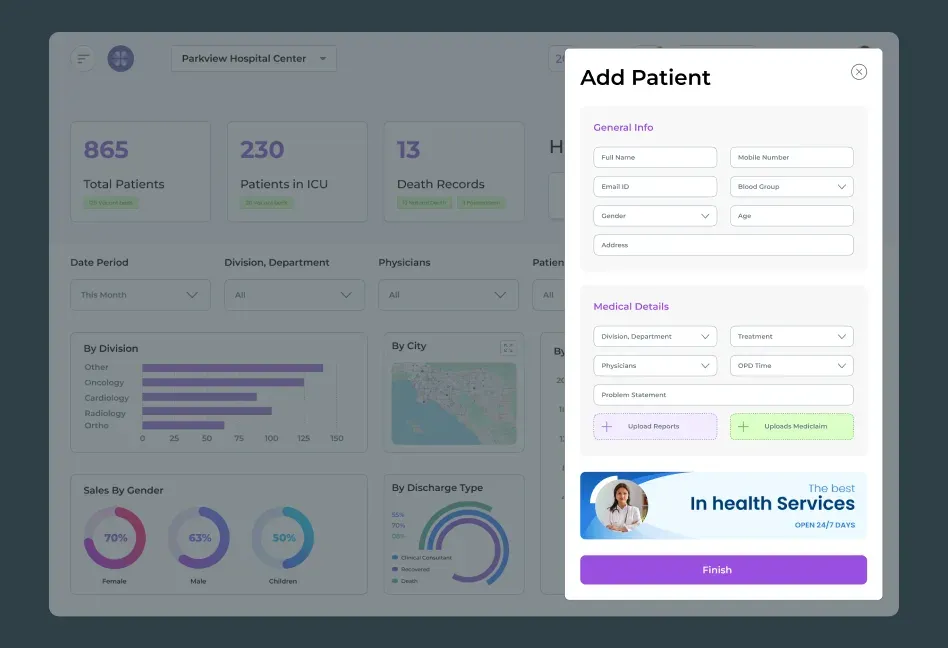

We built a Power BI patient management dashboard for one of Australia’s largest healthcare organisations. It gives hospital officials a real-time view of patient statistics and treatment details across every centre. Backed by a SQL Server data warehouse and ten years of history, it cuts manual data prep and puts accurate insights in front of the people making care decisions.
The client is one of Australia's largest healthcare organisations, operating several hospital centres. Leadership wanted a single place to monitor patient statistics, track treatment details and keep personalised care consistent across every unit, without depending on technical teams to pull the numbers.
Hospital management had the patient information they needed to plan, but it was locked inside the electronic system. Without in-house technical skills to extract it, leaders struggled to turn that data into confident, day-to-day patient management decisions.
A large share of the data had to be extracted, cleaned and curated by hand before anyone could use it. The work was slow; it ate into teams’ time, and every manual step added another chance for errors to creep into reports.
To surface meaningful trends, the client needed to load and analyse patient data going back ten years. That volume called for a setup that could handle deep history at scale without slowing down the reports teams rely on daily.
With several hospital centres using the same dashboards, the client needed firm control over who could see what. Each site’s users had to get the right information, and sensitive details had to stay hidden from anyone unauthorised.
We moved data from the transaction system into a data warehouse using an SSIS package. Everything the analysis needs now sits in one structured place, so reports draw on consistent data instead of manual extracts and cleanup.
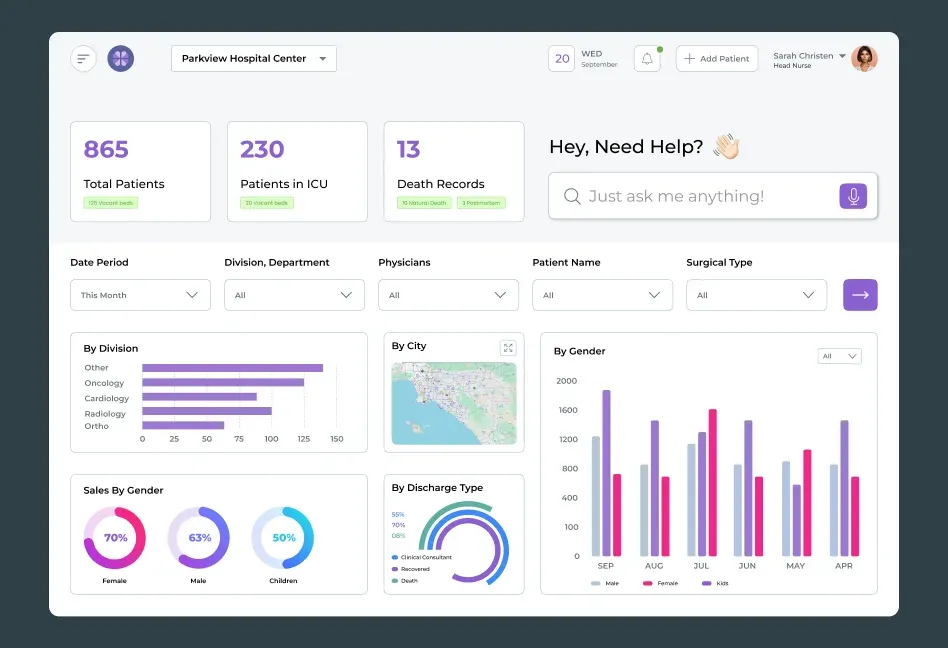
A tabular model handles high-velocity incoming data that arrives near real time. Hospital teams work with current patient numbers, even with a decade of history sitting behind them.
To strengthen qualitative analysis, we designed a modified lollipop chart for interpreting data. Complex patient information is presented clearly at a glance, which helps officials understand and act on it faster.
We applied Power BI row-level security to hide certain information from unauthorised users. Each hospital centre and user sees only what they should, which keeps access controlled across every site.
Hospital officials can monitor patient statistics across multiple treatment areas from a single dashboard. Doctors get the full picture in one view, which gives them better control over overall operations.
Treatment details sit in the same dashboard, so teams can follow patient care without switching between systems. This supports personalised healthcare delivery across all units of the organisation.
Extraction, cleaning and curation now run through an SSIS data pipeline rather than manually.
Ten years of patient data sit behind the dashboards, and they still open quickly.
real-time insights for quicker, better-informed choices.
large datasets integrated with far less manual effort and fewer errors.
easy-to-use, secure dashboard across all hospital centers.
shorter report load times and leaner data storage.